Key Takeaways
- Steering follows your eyes — where you look is what actually steers the car, not hand position
- Looking at the kerb instead of through the turn is what causes clipping
- DVSA does not require a specific hand technique — only safe, smooth, controlled steering
- Match your speed to what you can actually see and judge
- Let your hands respond to what your eyes are already doing, not the other way round
Why Learners Clip the Kerb
Clipping the kerb or swinging too wide on a turn comes down to where your eyes are looking, not how your hands are placed on the wheel.
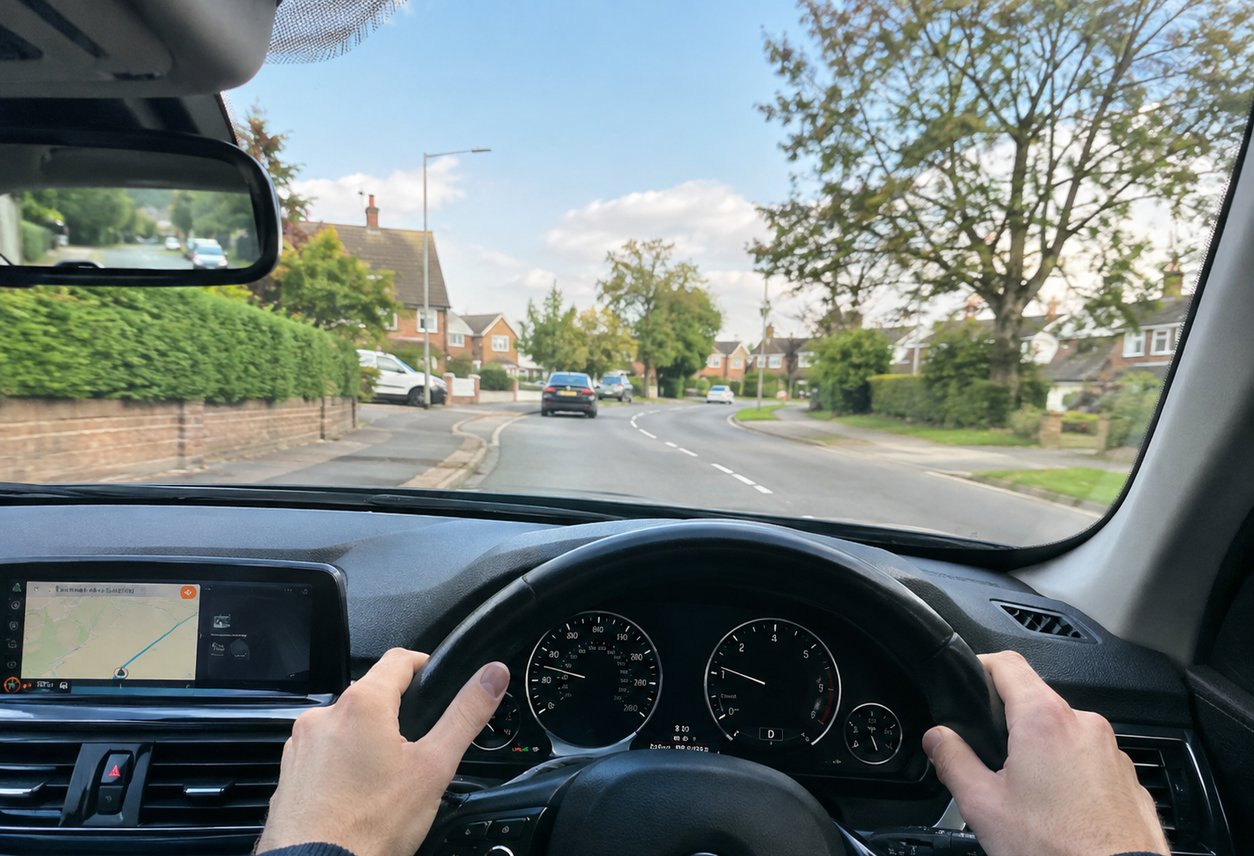
Steering follows your eyes: if you're looking at the kerb, the front of the car, or straight ahead instead of through the turn, the car drifts toward wherever your attention actually is — not where you intend it to go.
A learner who looks down at the kerb to "check" the gap is, without realising it, steering slightly toward it. By the time they notice they're too close, the correction comes late and sharp, rather than smooth.
Vision, Hands and Speed Working Together
- Look where you want to end up — well through the turn, not at the road immediately in front of the bonnet. This alone corrects most of the drift.
- Match your speed to what you can actually see and judge — turning too fast for the available sightline is what turns a small misjudgement into a kerb strike. Slow down enough that you have time to adjust.
- Let your hands respond to what your eyes are already doing — if vision and speed are right, the steering correction becomes small and early instead of large and late.
Does DVSA Require a Specific Steering Method?
No. DVSA guidance requires you to operate the hand controls, including steering, confidently — with control judged on whether it's safe, smooth and controlled, not on which specific hand technique you use.
How to Practise It
On a quiet road, deliberately look through the full length of the turn before you start steering into it — not at the kerb, not at the car ahead of you, but at where the road goes next. The turn feels easier immediately, because you're no longer reacting to what's right in front of you.
Preparing for Your Driving Test in Nottingham?
Getting steering and vision right takes real-road practice, not just theory. If you're learning around Nottingham, structured practice on local roads and roundabouts builds this instinct quickly.
Related Guides
Practise Steering & Vision Technique with H&E
H&E lessons build vision-led steering on real Nottingham roads from your very first lesson, so smooth turns become second nature well before test day.