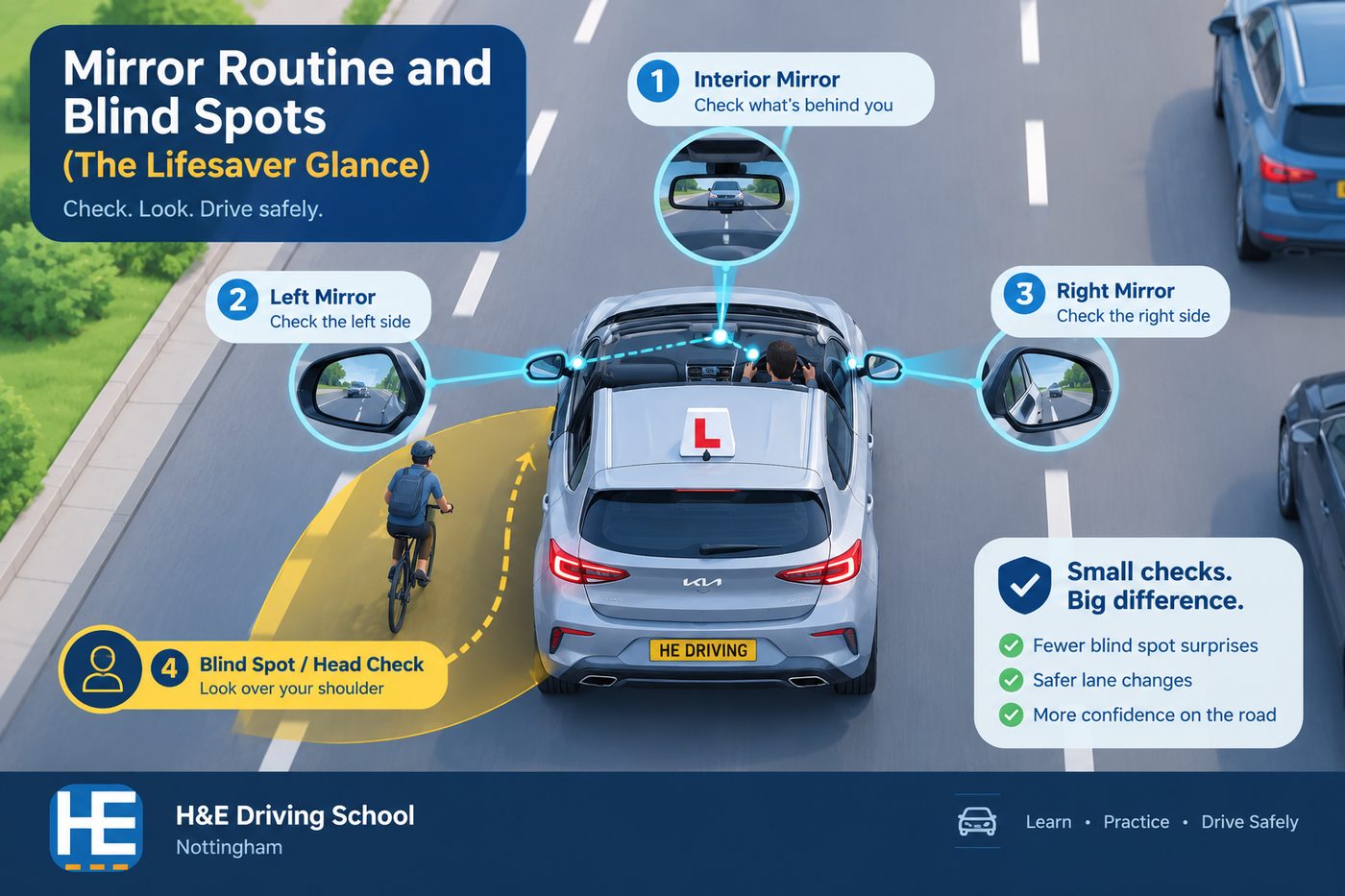
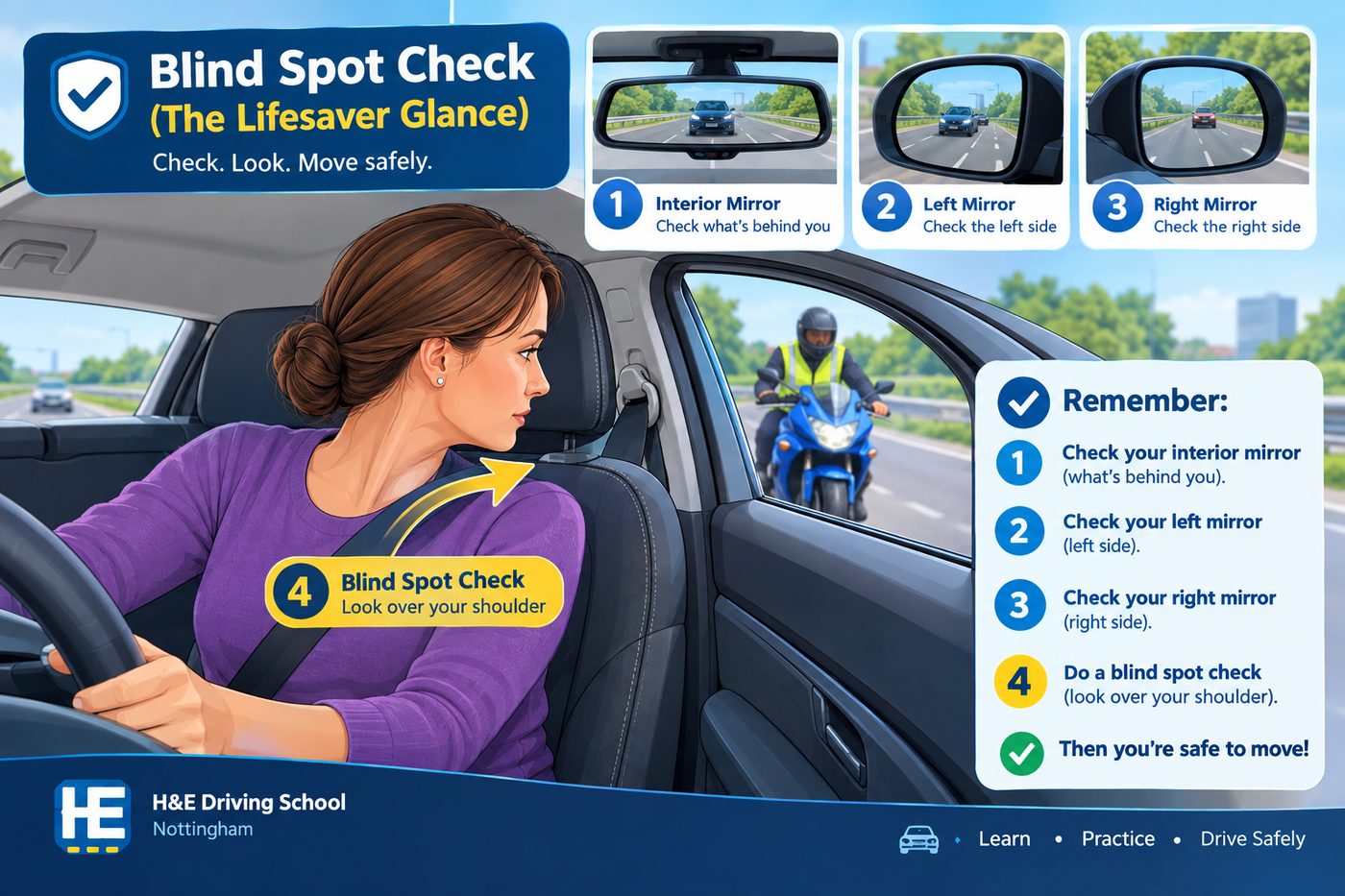
The full mirror routine, and the blind spot “lifesaver” check in action.
Key Takeaways
- MSM (Mirrors–Signal–Manoeuvre) helps you plan safely before changing direction, speed or position — not just at a fixed set of moments
- Mirrors give you valuable information, but they don't show everything — blind spots can remain alongside and behind your vehicle
- A quick blind-spot check may be needed when mirrors cannot give you a complete picture
- Build observation into your driving habits: check, understand what you see, then act
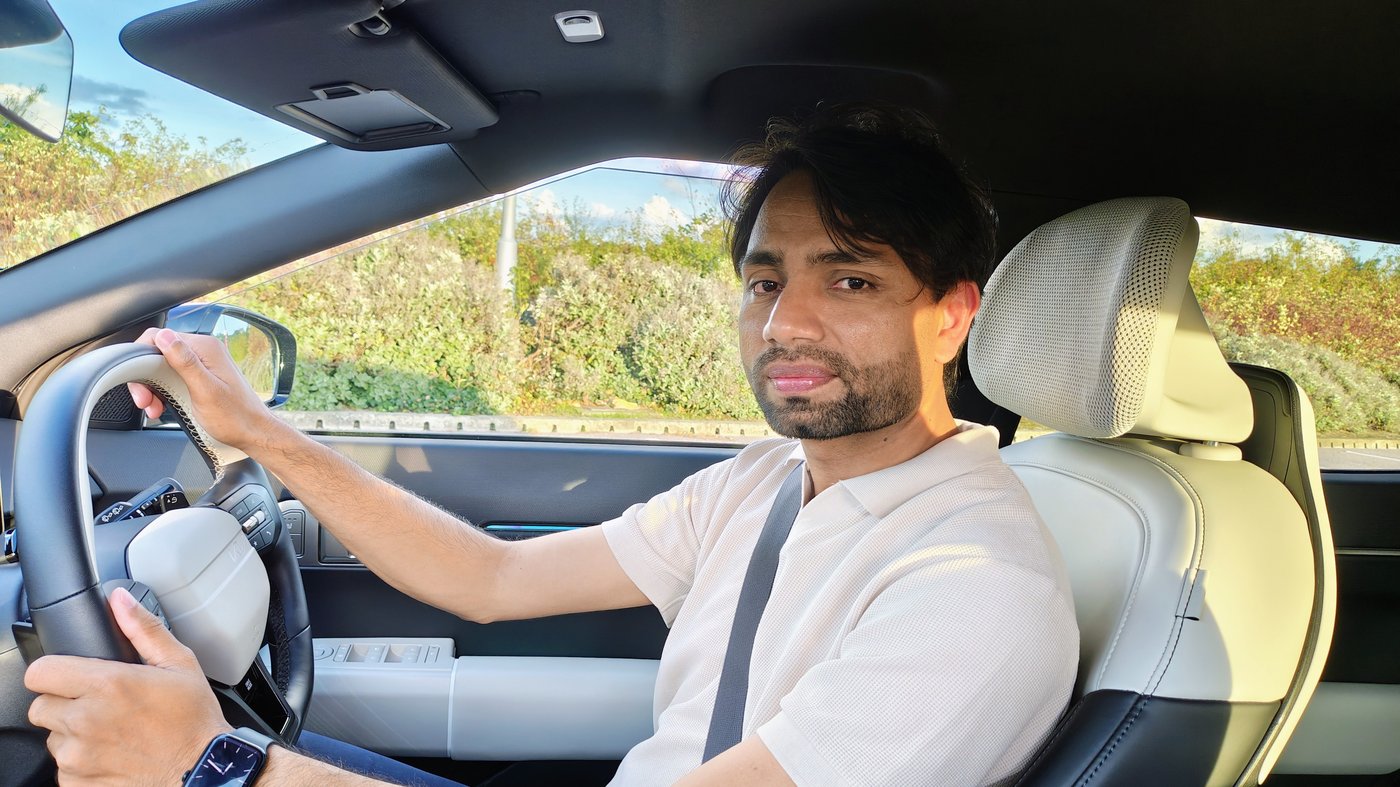 Written by Mohammad Habib, DVSA Green Badge ADI · 6 years teaching · 100+ students passed · About Mohammad →
MSM stands for Mirrors–Signal–Manoeuvre — a structured routine that helps drivers plan safely before changing direction, speed or position. Highway Code Rule 161 says mirrors should be used frequently throughout your journey and in good time before signalling or changing direction or speed. In situations such as changing lanes or moving position, effective mirror and blind-spot observation helps you understand what is around the vehicle before you act — not just at a handful of fixed moments.
When Mirror Checks Matter Most
Moving Off
Before moving off from the side of the road, a parking space or another stationary position, use your mirrors, check the relevant blind spots and take a final check before moving. Move only when it is safe.
Changing Lanes
Before moving into another lane, use your mirrors to assess the traffic around you. Signal when appropriate and continue checking. If a vehicle, cyclist or motorcyclist could be hidden in the relevant blind spot, make a quick sideways glance before moving.
Turning
Before turning left or right, use your mirrors in good time to assess traffic behind and alongside you. Signal when necessary and continue checking as you approach the turn, paying particular attention to cyclists and motorcyclists.
Changing Speed
Before a planned change of speed, check your mirrors in good time so you know what is happening behind you. This helps you understand how your braking or acceleration may affect following traffic and react accordingly.
Stopping or Pulling Up
Before pulling up or stopping, check your mirrors in good time so you know what is happening behind you. This is particularly important when slowing significantly or stopping where following traffic may need to react.
The Blind Spot — The “Lifesaver” Glance
Why aren't mirrors enough on their own? Mirrors cannot show every area around your vehicle. There can be areas alongside and behind the car that are not visible in the mirrors.
A mirror check is not the same as a blind-spot check. Seeing nothing in your mirrors does not automatically mean the area is clear.
This is where the “lifesaver glance” can help. “Lifesaver” is an informal driving-instructor term, not a Highway Code term — it describes a quick blind-spot or shoulder check. It isn't a fixed action to perform at every single manoeuvre: Highway Code Rule 161 explains that mirrors don't cover all areas, so you will need to look round and check when a blind spot could realistically contain another road user — before moving off, changing lanes, turning, or in any situation where mirrors alone might not give you the full picture.
A missed observation can affect your driving-test result depending on the circumstances. A poorly timed or ineffective blind-spot check may result in a driving fault where it does not affect safety. If a lack of observation leads you to move into the path of another road user, the fault can be more serious depending on the circumstances.
Why the Blind Spot Matters Most Around Vulnerable Road Users
Cyclists and motorcyclists can be harder to see, particularly in slow-moving traffic or when they are approaching alongside your vehicle. When changing direction or lane, take particular care not to cut across the path of cyclists going ahead — make sure your mirrors and blind-spot checks give you a clear picture of what is around you first.
Instructor's Tip: Check, Understand, Act
Don't treat the mirror routine as something you perform mechanically for the examiner. Build it into your driving habits: before you signal, change direction or change speed, let your eyes check what is happening around you and use that information to decide what to do next. Once “check, understand, then act” becomes automatic, observation stops feeling like an extra step and becomes part of normal driving.
Instructor's tip: Don't just check the mirror. Read it.
Whether you're learning around Nottingham's busy urban roads, preparing for a test at Chilwell or Colwick, or building confidence in heavier traffic, developing effective mirror and blind-spot observation is an important part of becoming a safe, independent driver.
Highway Code References
- Rule 159 – Moving Off: use all mirrors to check the road is clear, look round to check the blind spots, signal if necessary, and take a final look round before moving off.
- Rule 161 – Mirrors: use your mirrors frequently and in good time before you signal or change direction or speed, and remember that mirrors don't cover all areas — you will need to look round and check.
Read the full wording of these rules on the official GOV.UK Highway Code (Rules 159–203).
Related Guides
Ready to Make Your Mirror Routine More Natural?
At H&E Driving School Nottingham, we work on observation, mirror use, blind-spot awareness and safe decision-making as part of normal driving — not just as a test-day routine. Book via WhatsApp.