Key Takeaways
- A standalone pedestrian refuge island is not, by itself, a formal pedestrian crossing and does not create the specific crossing priority rules that apply to a zebra, parallel or signal-controlled crossing
- A pedestrian waiting on a standalone refuge island does not automatically mean that you must stop. However, you should continue to observe carefully, assess their intentions and be prepared to slow or stop if they are about to cross your path
- At a junction, Rule H2 applies: if you are turning into or out of a road, you should give way to pedestrians who are crossing or waiting to cross that road
- Do not assume that a refuge island gives you priority. Your response should be based on the road layout, the type of crossing facility, the pedestrian's position and what they are doing
- On a driving test, the examiner is looking for good observation, anticipation, appropriate speed and a safe response — not automatic braking at every refuge island
- If a pedestrian has started crossing the road you are turning into or out of at a junction, Rule 170 confirms that they have priority and you should give way. In other situations, respond safely and give way where necessary
- Do not confuse a standalone refuge island with an island that forms part of a formal pedestrian crossing. If it forms part of a zebra, parallel or signal-controlled crossing, the rules for that crossing apply
Refuge Island ≠ Pedestrian Crossing
A refuge island helps pedestrians cross the road in two stages. It is not, by itself, a pedestrian crossing. If the island forms part of a zebra, parallel or signal-controlled crossing, however, the rules for that crossing apply.
What Is a Refuge Island?
A refuge island (also called a pedestrian refuge or pedestrian island) is a raised island in the middle of a road that allows pedestrians to cross in two stages.
The pedestrian can cross one direction of traffic, wait on the island if necessary, and then cross the second half of the road when it is safe.
Refuge islands are extremely common throughout the Nottingham road network — you will encounter them regularly in Beeston, Hyson Green, Carlton, West Bridgford, Bulwell, and many other areas covered by H&E lessons.
What Does the Highway Code Say?
It is important to distinguish between a standalone pedestrian refuge island, a formal pedestrian crossing, and a road junction.
A standalone pedestrian refuge island is not, by itself, a formal pedestrian crossing. The island alone does not create the specific pedestrian priority rules that apply at formal crossings.
A pedestrian waiting on a standalone refuge island does not automatically mean that you must stop. However, you should assess whether they are preparing to cross, adjust your speed when necessary, and be ready to stop if they move into your path.
The situation is different at a junction. Under Highway Code Rule H2, when you are turning into or out of a road, you should give way to pedestrians who are crossing or waiting to cross that road (see our junction observations guide for the full detail). The presence of a refuge island does not remove this junction rule.
The key question is therefore not simply whether there is a refuge island. You need to consider:
- Is this a standalone refuge island or part of a formal crossing?
- Are you approaching or negotiating a junction?
- Is the pedestrian waiting, crossing, or about to cross your path?
- What road are you turning into or out of?
- Can you proceed safely without causing the pedestrian to stop, change direction or be put at risk?
The Highway Code also advises drivers to take particular care around pedestrians and to give way where necessary to avoid an incident. The Highway Code also specifically warns drivers not to overtake on the approach to crossing facilities where a vehicle ahead is slowing to stop for a pedestrian crossing from a pedestrian island (Rule 167). This reinforces the need to anticipate pedestrians and avoid overtaking when approaching a crossing where someone may be crossing.
Common Misconceptions
"I always have to stop at a refuge island if someone is waiting"
Not correct, as a blanket rule. For a standalone refuge island away from a junction, a pedestrian waiting on the island does not automatically mean you must stop — but you should assess whether they are preparing to cross, reduce speed if necessary, and be ready to stop if they move into your path. Stopping unnecessarily when there is no developing pedestrian hazard can affect your progress. On a driving test, unnecessary hesitation or stopping when it is safe and reasonable to proceed can be marked as a fault. If you are turning into or out of a road at a junction, Rule H2 applies. You should give way to pedestrians who are crossing or waiting to cross that road. If they have already started to cross, they have priority and you should give way.
"I don't have to look at the island at all if I have priority"
Also not correct. Even when you are not required to stop, you must anticipate the situation ahead. A pedestrian on or approaching a refuge island may be about to cross the next part of the road. Scanning ahead and adjusting speed as you approach any refuge island is good driving practice — and what examiners expect to see.
What Examiners Look For at Refuge Islands
On your driving test, the examiner assesses how well you observe, anticipate and respond to pedestrians and developing hazards around refuge islands. They are looking for evidence that you have identified the situation and responded appropriately, including:
- Identifying the island and any pedestrians in good time
- Adjusting your speed when the developing situation requires it, rather than slowing automatically at every refuge island
- An appropriately controlled approach, with the ability to stop safely if a pedestrian begins to cross your path
- An appropriate decision based on the pedestrian's position and behaviour, not just their presence near the island
Formal Pedestrian Crossings in the UK — and How They Differ from a Refuge Island
Formal pedestrian crossings have specific priority and signalling rules. The exact rule depends on the type of crossing. Understanding the difference is essential for your theory and practical test:
- Zebra crossing: black and white stripes with Belisha beacons — you should give way to pedestrians waiting to cross, and must give way once a pedestrian has moved onto the crossing
- Parallel crossing: similar to a zebra crossing but with a cycle route marked alongside the black and white stripes — you should give way to pedestrians and cyclists waiting to cross, and must give way once they have moved onto the crossing
- Pelican crossing: traffic-light controlled; when the amber light is flashing, you must give way to pedestrians on the crossing
- Puffin crossing: traffic-light controlled, with pedestrian detection and no flashing-amber phase
- Toucan crossing: shared pedestrian and cyclist crossing, push-button controlled
- Equestrian crossing: designed for horse riders, with wider crossing facilities and higher-positioned controls
A standalone refuge island is not, by itself, any of these formal crossing types. It is a physical aid to help pedestrians cross in stages — not a formal crossing with its own priority rules. Do not confuse a standalone pedestrian refuge island with a refuge island that forms part of a formal crossing. For example, a zebra or parallel crossing with a central island is treated as two separate crossings, so the relevant crossing rules apply to each half. Other controlled crossings can operate differently depending on their layout.
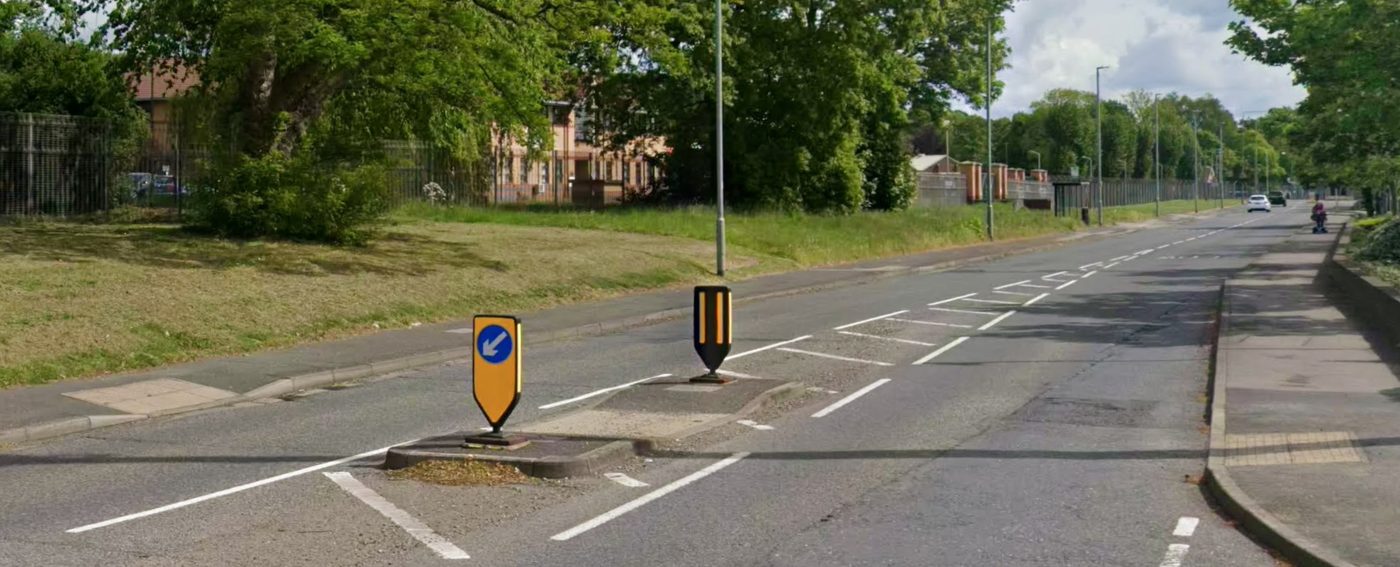
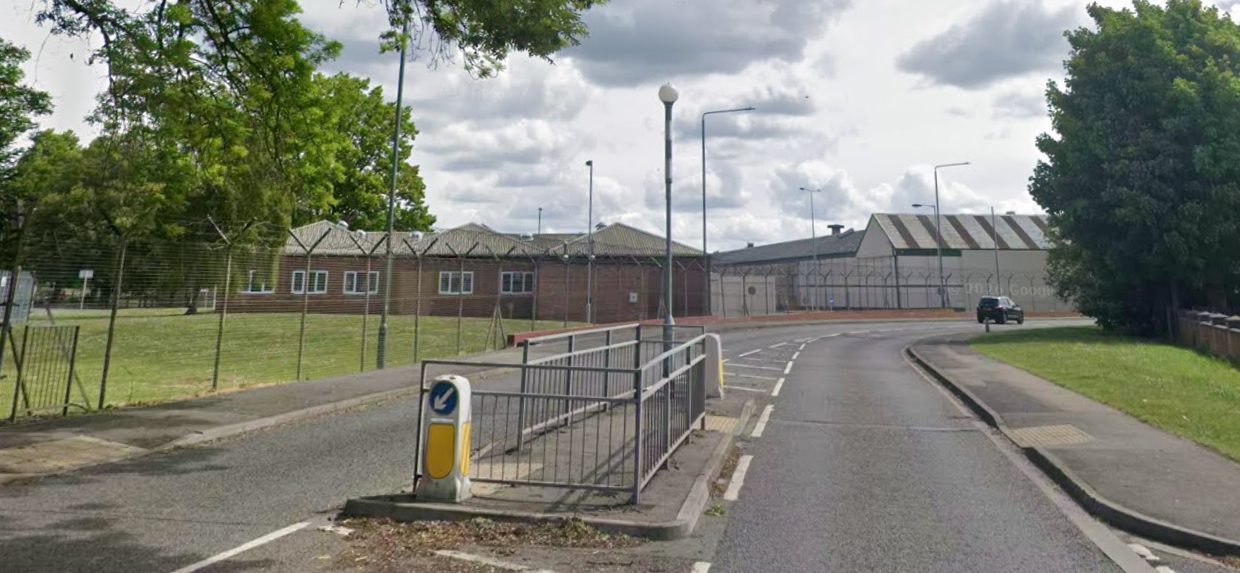
Refuge (safe) islands on Nottingham roads. Source: Google Street View.
Related Guides
Practise These Scenarios with H&E
H&E lessons include refuge islands and all types of formal pedestrian crossings throughout the Nottingham route network. Book via WhatsApp.