
What You Will Learn
- How to position your car correctly on a road without centre line markings
- Reading the road width and adjusting position accordingly
- Dealing with oncoming traffic on narrower roads
- Why road positioning matters for your driving test score
Road Positioning on Unmarked Roads
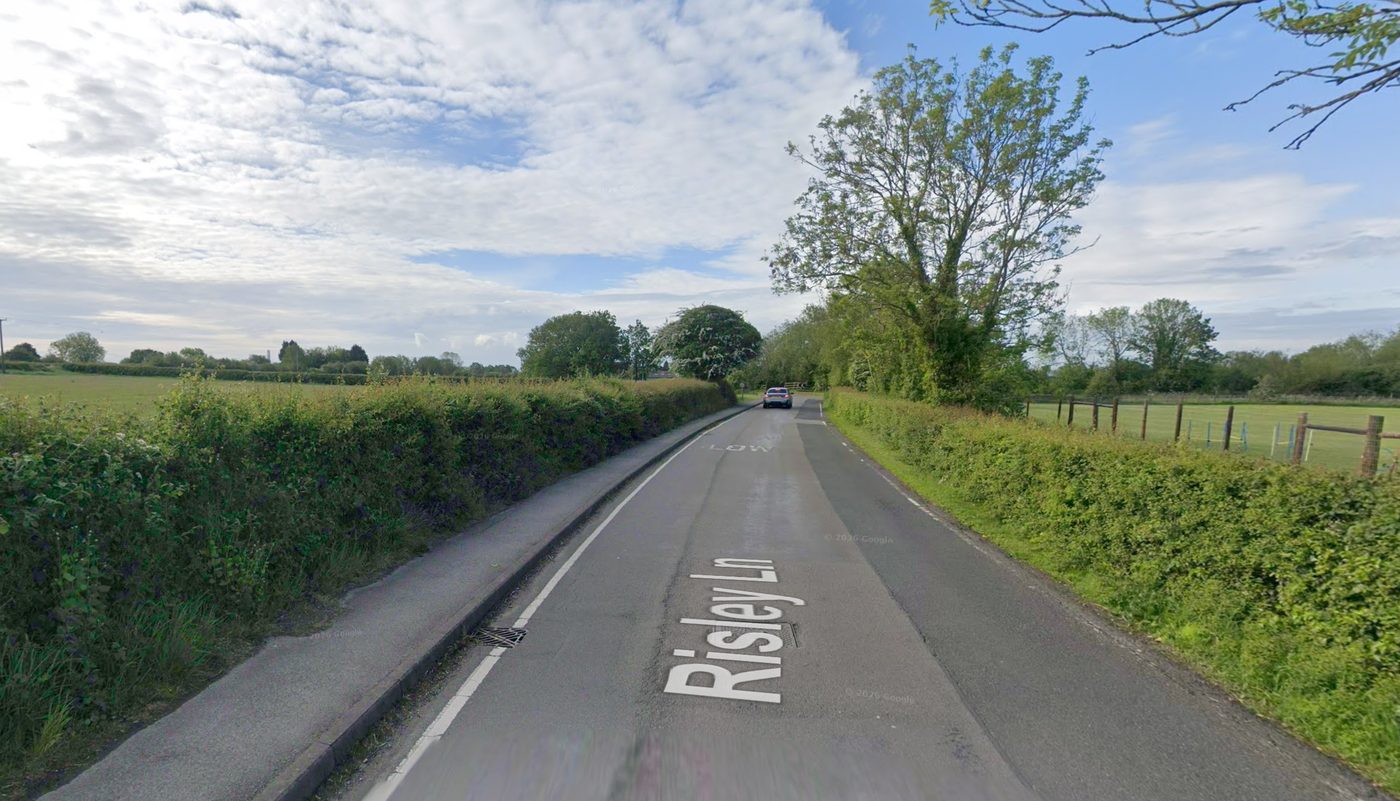
Risley Lane is representative of a road type that appears frequently on Nottingham driving test routes — a road without a centre line, where learners must judge their position relative to the road width, the verge, and any oncoming traffic. Unlike a dual carriageway or a clearly marked A-road, these roads require active position management rather than simply following the markings.
The Correct Default Position
On a road without a centre line, your default position should place your vehicle approximately one metre from the left-hand edge of the carriageway — enough to avoid the gutter and any debris, while leaving sufficient space for oncoming vehicles to pass comfortably without either vehicle needing to adjust dramatically.
- Do not drive too far left (into the gutter or verge) — this narrows your reaction time to obstacles on the left
- Do not drive in the centre of the road — this forces oncoming vehicles to take evasive action
- Adjust position fluidly as the road width changes, parked vehicles appear, or oncoming traffic is present
Dealing with Oncoming Traffic
On a narrower road like Risley Lane, meeting oncoming traffic requires early awareness and adjustment. As soon as you see an oncoming vehicle:
- Assess the available road width — is there enough for both vehicles to pass without stopping?
- If there is space, maintain a steady course and speed — sudden corrections are more dangerous than a slightly tighter pass
- If the road is genuinely too narrow, reduce speed and hold your position — the oncoming driver will also be adjusting
- Eye contact and confidence signal to the other driver that you have assessed the situation
Why Road Positioning Matters on Your Test
Road positioning is assessed throughout the entire driving test — not just at junctions or roundabouts. Examiners observe where on the road you drive relative to the markings, other vehicles, and hazards. Consistent good positioning demonstrates spatial awareness and car control that goes beyond the basics.
On roads like Risley Lane specifically, the absence of road markings makes your chosen position more visible to the examiner — there is no line to follow, so the position you choose shows directly how you are reading the road.
Applying This to Other Roads on the Nottingham Test Route
The positioning principles in this video apply across many roads in the Chilwell, Stapleford, Long Eaton, and Bramcote areas — wherever road markings are absent or where the road width changes. H&E lessons in these areas specifically include time on narrower roads to build this skill before test day.
Related Guides
Book Lessons on These Roads
H&E trains on the actual Chilwell test routes throughout your course. Book via WhatsApp.