Key Takeaways
- Judge kerb distance through your mirrors, not by looking down
- Looking away from your mirrors means losing track of what's happening around the car
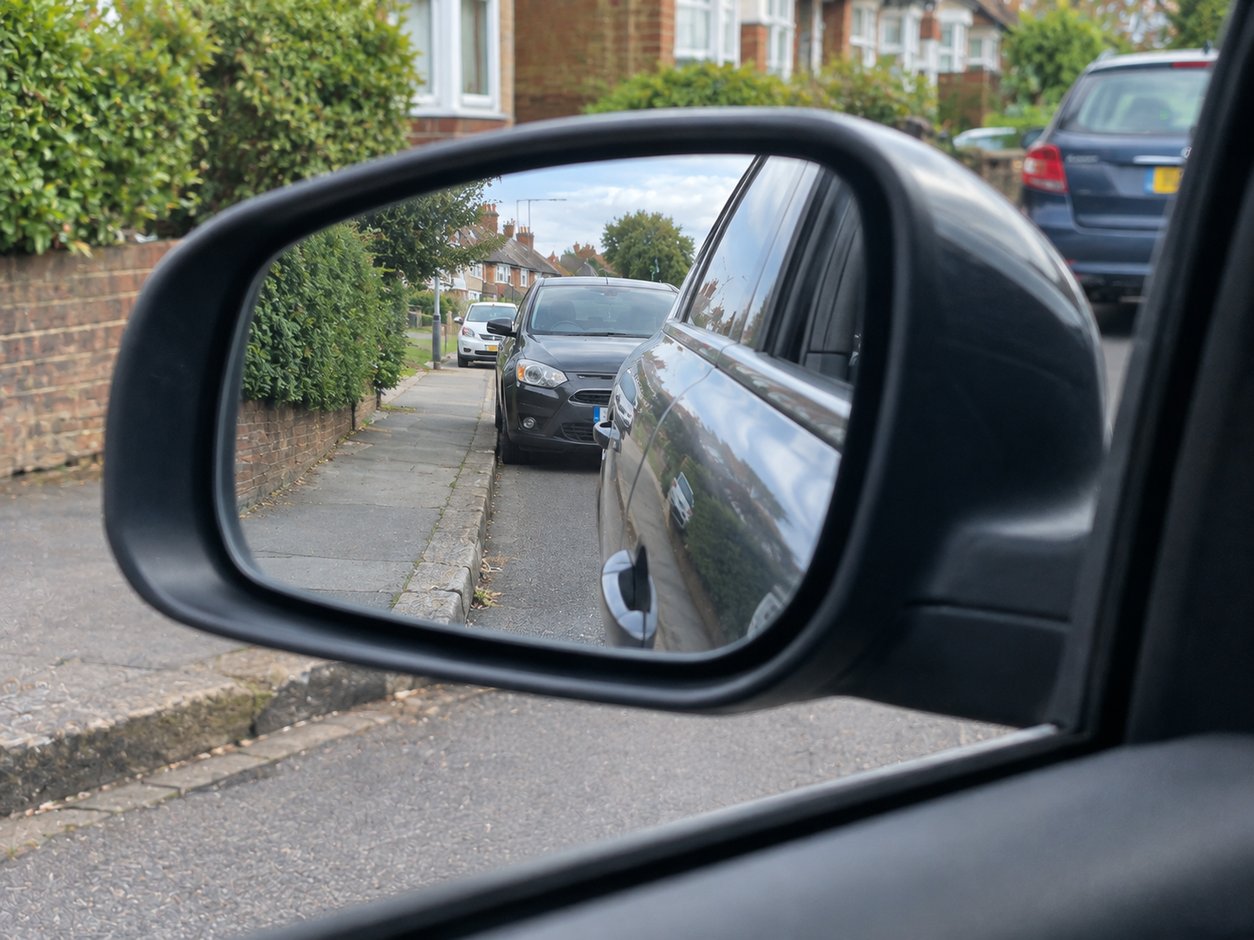
- Use the door mirror to watch a consistent kerb-line reference as you reverse in
- If the gap looks too wide or too tight, adjust based on the mirror, not by turning your head down
- Practise slowly first to build the habit before adding speed
Judge the Kerb Through Your Mirrors
You judge your distance from the kerb through your mirrors and the reflection in your door window — not by glancing down at the wheel, which breaks the continuous observation examiners are marking you on.
The moment your eyes leave the mirrors, you lose track of what's happening around the car — another vehicle approaching, a pedestrian stepping out, or your own alignment drifting.
The Mirror Reference Method
As you reverse in, use your door mirror to watch the kerb line appear and stay a consistent, small gap away — this is a repeatable visual reference rather than a guess. If the kerb disappears from view, or the gap looks too wide or too tight, that's the cue to adjust, checked through the mirror, not by turning your head down.
How to Build the Habit
Practise the manoeuvre slowly enough that you can build this mirror-reference habit before adding speed. Once it's automatic, the whole manoeuvre becomes far less stressful, because you're never guessing.
Preparing for Your Driving Test in Nottingham?
Reverse parallel parking feels daunting without a clear reference method — but with one, it becomes one of the more straightforward parts of the test.
Related Guides
Master Parallel Parking with H&E
We build the mirror-reference method into every lesson, so parallel parking stops feeling like guesswork well before your test date.