What You Will Learn
- Why a wrong turn during independent driving is not an automatic fail
- What the examiner is actually assessing in this section
- Why the sat nav doesn't show you which lane to be in
- What happens if the sat nav device has a problem mid-test
What Independent Driving Actually Tests
Independent driving makes up around 20 minutes of the test. You'll either follow directions from a sat nav or follow a short sequence of traffic signs. The point of this section isn't to test your navigation — it's to see whether you can keep driving safely while thinking about something else, the way you will once you're driving on your own.
A Wrong Turn Is Not Automatically a Fault
If you miss a turn or take a different route than the sat nav intended, the examiner will simply give you new directions from wherever you end up — it is not marked as a fault by itself. What they're watching is how you handle it: staying calm, continuing to observe and react normally, and not making a mistake because you were flustered by going the "wrong" way.
Sat Nav Doesn't Show You Everything
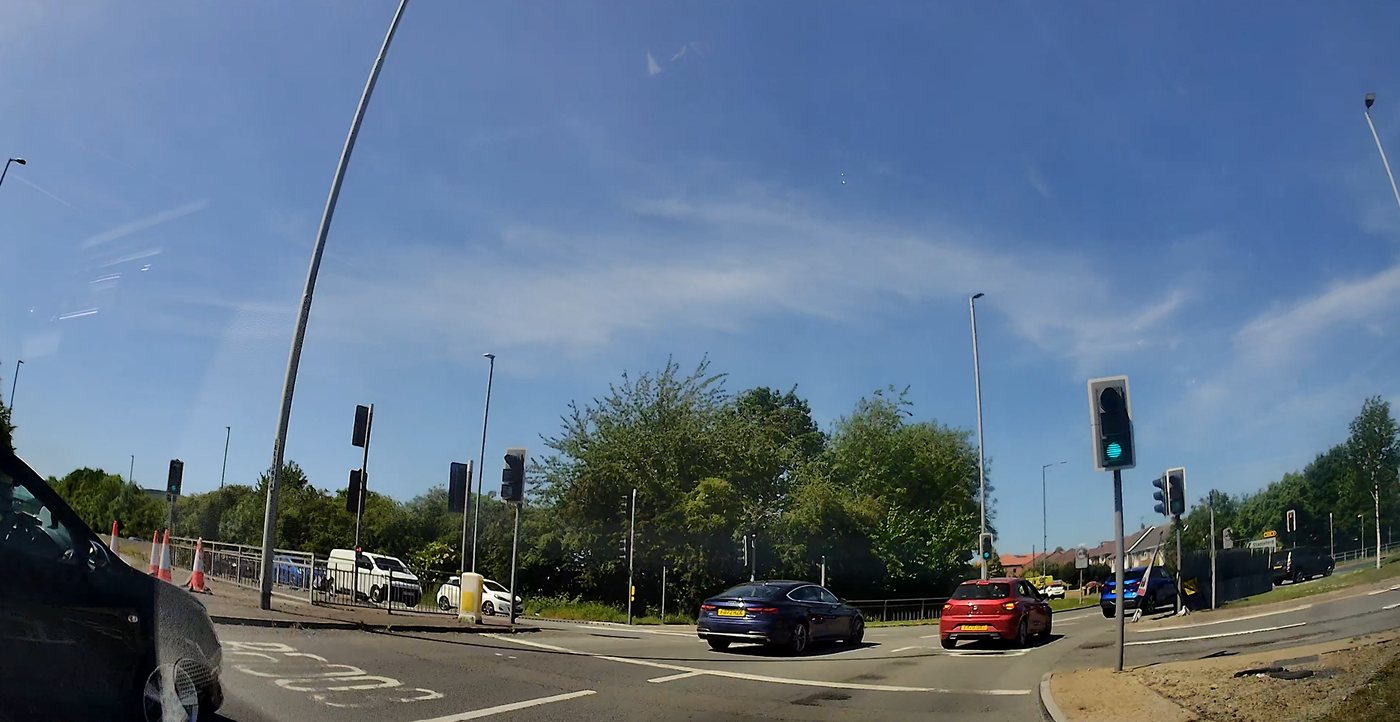
The test sat nav gives you a route and spoken directions, but it won't tell you which lane to be in at a junction, and it won't account for a lane closure or a road layout change. That's exactly why the examiner is watching your observation and decision-making in this section, not your ability to follow the screen precisely.
When the Sat Nav and the Road Signs Disagree
If the sat nav tells you to do something that conflicts with what the road signs or lane markings are telling you — follow the road signs. Reading the actual road in front of you always takes priority over the device.
If the Sat Nav Has a Technical Problem
If the device loses signal, the examiner will give you a new instruction or set a new destination so the section can continue. This is handled by the examiner — it's not something that affects your result on its own.
Instructor's tip: "If you're following the sat nav voice word-for-word instead of reading the road, a wrong turn feels like a crisis. Treat the sat nav as a general heading, and the road signs and lane markings as what actually tells you what to do right now."
Related Guides
Build Confidence for Independent Driving
H&E lessons include practice on real Nottingham test routes, with sat nav sections built in. Book via WhatsApp.