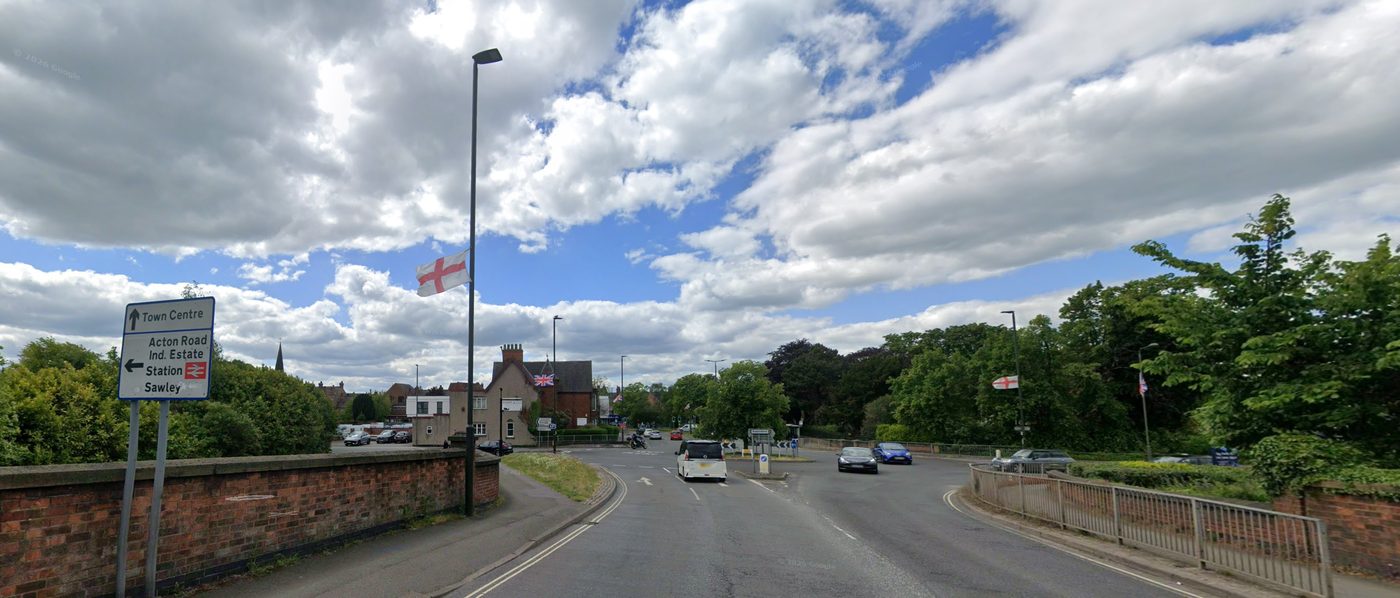
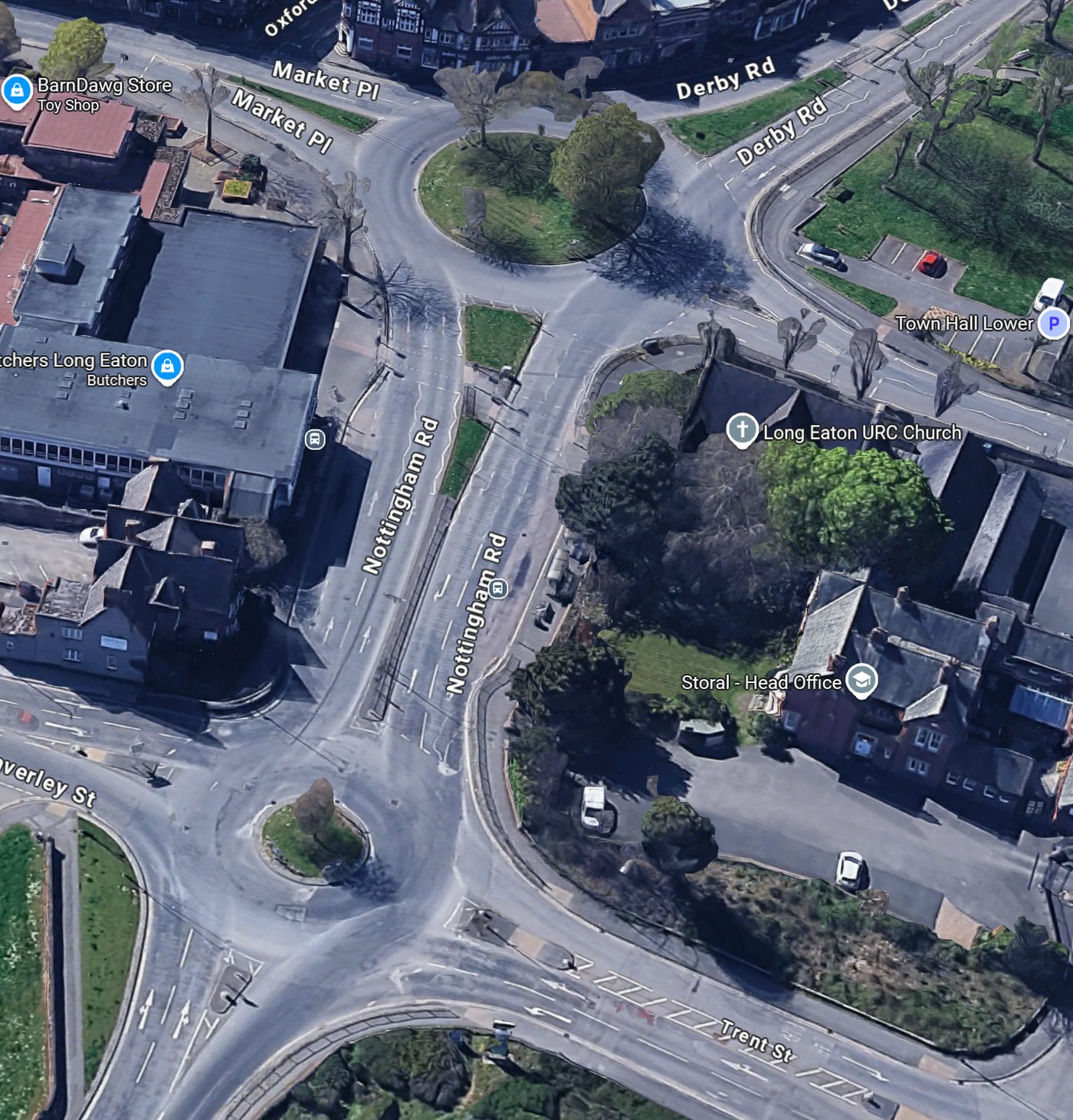
The double roundabout on the Chilwell test route — street view and aerial layout. Source: Google Maps.
What You Will Learn
- Correct lane selection before approaching the first roundabout
- How to plan for the second roundabout while still on the first
- When to signal — and when not to signal — between the two roundabouts
- What examiners specifically watch for on double roundabouts
 Written by Mohammad Habib, DVSA Green Badge ADI · 6 years teaching · 100+ students passed · About Mohammad →
Why Double Roundabouts Are Challenging
A double roundabout is not two separate decisions made at two separate times — it is one continuous sequence that requires forward planning from well before the first entry. The challenge is that focusing entirely on the first roundabout, without a plan for the second, leads to hesitation, wrong lane position, or incorrect signalling.
Lane Selection — Before You Reach the First Roundabout
Your lane choice for a double roundabout must be made before you reach the first one. The road markings and overhead signs will indicate which lane leads to which exit across both roundabouts. Read them as early as possible — at least 100 metres before the first entry.
- If your destination is through or right at the second roundabout, position right or in the appropriate lane on the approach to the first
- Do not change lanes between the two roundabouts — your lane choice at the first entry carries through to the second
- Stay in your chosen lane even if you think you are in the wrong one — lane changes between roundabouts are more dangerous than a small positional error
Signalling Between the Two Roundabouts
Signal management here is easy to get wrong in the moment. The rule is straightforward:
- Signal left to exit the first roundabout as normal, but cancel the signal immediately once you have exited
- Do not carry the left exit signal into the second roundabout — it will mislead other drivers about your intentions
- Apply a new signal at the second roundabout based on your exit from it — treat it as a fresh roundabout
Looking Ahead While on the First Roundabout
Once you are on the first roundabout, your eyes should already be scanning ahead towards the second. You are looking for: traffic already on the second roundabout, the lane you need, and any hazards in the section between the two. This forward scanning is what separates a confident double roundabout from a reactive one.
What Examiners Watch For
- Lane position before the first roundabout — is it chosen early and held consistently?
- Observations on the first roundabout — mirrors, effective scanning of traffic
- Signal management between the two roundabouts
- Approach speed to the second roundabout — did the driver allow enough time to assess it?
- Correct exit from the second roundabout with appropriate mirror and signal
Related Guides
Book Lessons on These Roads
H&E trains on the actual Chilwell test routes throughout your course. Book via WhatsApp.